
When it comes to casual wear, few items are as versatile and beloved as the hoodie. Whether you’re running errands, hitting the gym, or lounging at home, a cozy fleece-lined hoodie is a wardrobe staple. But if you’ve ever paused before typing the word, wondering “is it hoody or hoodie?”, you’re not alone. Spelling this simple piece of clothing has sparked confusion across emails, shopping lists, and fashion blogs alike.
In this article, we’ll break down the differences between hoodie vs hoody, explore plural forms, and provide real-world examples to help you confidently choose the right spelling every time.
The Origins of Hoodie
The term “hoodie” comes from the word hood, reflecting the garment’s signature feature. The -ie ending is common in English to form diminutives or colloquial terms, giving “hoodie” a casual, friendly tone.
Historically, hooded sweatshirts gained popularity in the 1930s among workers in cold warehouses. By the 1970s and 1980s, the hoodie became a symbol of streetwear and sportswear, embraced by skaters, athletes, and eventually the fashion industry. Today, hoodies appear in high-fashion collaborations, promotional apparel, and casual wardrobes worldwide.
The spelling “hoody” also exists, but it is far less common, primarily appearing in British or Australian English. In contrast, “hoodie” dominates American English, appearing in dictionaries like Merriam-Webster and Oxford.
Hoodie vs Hoody: Understanding the Difference
You might wonder: “is it hoody or hoodie?” The answer depends on region, context, and audience.
- Hoodie: The standard spelling in American English. It’s widely recognized in e-commerce searches on Amazon and eBay, Google Trends, and in popular fashion publications.
- Hoody: Less common, mostly found in the UK or Australia. It can appear in informal contexts, especially sportswear or team wear references.
Think of it like this: If you’re emailing an American client or writing a blog for a US audience, stick with hoodie. If your audience is primarily in the UK, hoody won’t look incorrect, but it may appear outdated.
How to Spell Hoodie Correctly
For clarity, here’s a quick guide:
- Singular: hoodie / hoody
- Plural: hoodies / hoodys
Most fashion experts and dictionaries prefer hoodies over hoodys when referring to multiple garments. For example, an online clothing store might list “10 cozy hoodies for winter” rather than “10 cozy hoodys.”
Scenario Examples: Using Hoodie or Hoody in Real Life
Sometimes, context makes the spelling choice obvious. Let’s look at a few practical examples:
Email Example: Ordering Team Apparel
Subject: Hoodie Order for Basketball Team
Hi Jordan,
I hope you’re doing well. I’d like to place an order for 15 customized hoodies for our basketball team. Please include our team logo on the front and the players’ names on the back. Also, confirm the available sizes we’ll need a mix of adult and youth hoodies.
Thanks,
Megan
Here, “hoodies” follows standard American spelling and reads naturally in a professional yet casual email.
Marketing Example: Online Store Listing
Title: Oversized Cozy Hoodie for Men and Women
Description: Stay warm in style with our oversized, fleece-lined hoodie. Perfect for streetwear, gym wear, or casual weekends, this hoodie combines comfort and practicality. Available in multiple colors with optional custom logos or graphics.
Using “hoodie” here aligns with US e-commerce trends and enhances discoverability for shoppers searching online.
Informal Social Post
“Just grabbed a new hoody from the local store. Can’t wait to wear it during my morning runs!”
This usage is casual and might appeal to a UK or Australian audience. While “hoody” is acceptable, using “hoodie” ensures broader recognition.
When to Use Hoody vs Hoodie
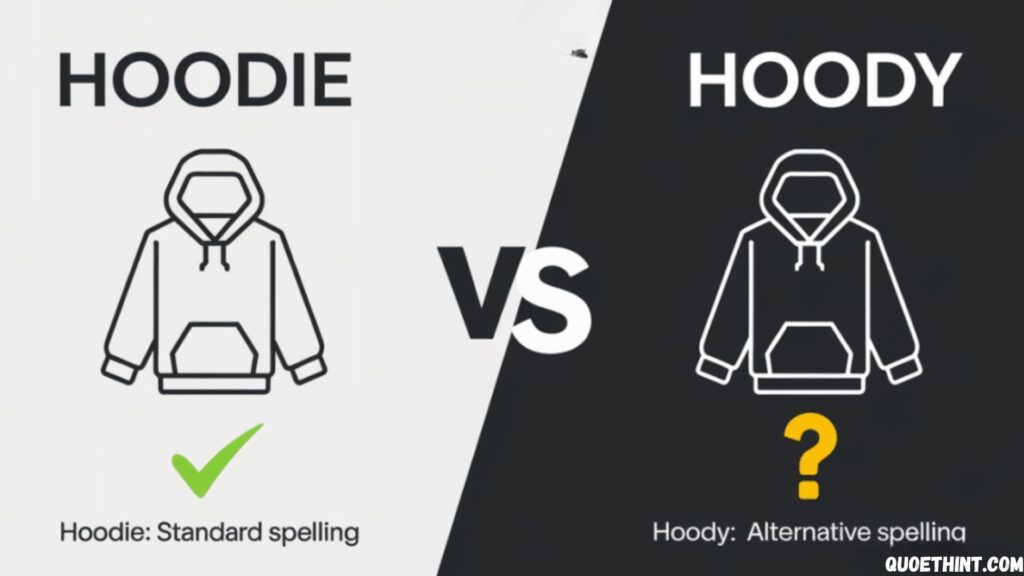
You might still ask: “when should I use hoody vs hoodie?” Here’s a quick guideline:
- Use hoodie for American audiences, formal marketing, online stores, or official documentation.
- Use hoody for UK/Australian contexts or informal personal communication, though it’s rarely required.
- Always use hoodies for plural unless deliberately appealing to a region that prefers “hoodys.”
Popularity Trends and Research Insights
Looking at Google Trends and Google Ngram Viewer, you’ll notice hoodie overwhelmingly outperforms hoody in search volume and usage frequency. Even in the UK, “hoodie” has been gaining traction, partly due to the global influence of American fashion and streetwear culture.
Additionally, fashion brands and sports teams overwhelmingly use hoodie in promotional materials, reinforcing the standardization of this spelling.
Practical Tips for Writers and Communicators
- When in doubt, default to hoodie. It’s widely recognized, professional, and searchable.
- Remember the plural: hoodies, not hoodys, for multiple garments.
- Consider your audience: American readers expect hoodie, UK readers may accept hoody.
- Maintain consistency. Don’t switch between hoodie and hoody in the same document or campaign it looks sloppy.
- For emails, blogs, or product listings, always proofread using dictionary listings to confirm correct usage.
Conclusion
Choosing between hoody or hoodie may seem trivial, but the right spelling communicates professionalism, attention to detail, and awareness of your audience. In American English, hoodie dominates, while hoody remains a regional variant mostly in the UK or Australia. By keeping plural forms, context, and audience in mind, you’ll never second-guess your spelling again.
So next time you type a message to a friend, draft a marketing email, or list apparel online, remember: hoodie is usually the safe bet, but knowing the regional twist with hoody can make your writing feel tailored and informed.
Whether you’re shopping for a cozy fleece-lined hoodie, designing team wear, or writing about streetwear fashion, using the correct spelling ensures your content reads clearly and professionally.

Bugti is the founder of Quoethint.com, a hub for English language tips, writing advice, and grammar guidance. With years of experience in English studies and a passion for clear communication, Bugti created this platform to make grammar and writing easy to understand for everyone.