When it comes to writing professionally or personally, one word trips up many people: is it occasion or ocassion? You might see emails, invitations, or text messages where both versions appear. Understanding the correct spelling of occasion isn’t just about avoiding typos it’s about writing clarity, professionalism, and effective communication.
Let’s break it down in a simple, human-friendly way.
Understanding the Correct Form
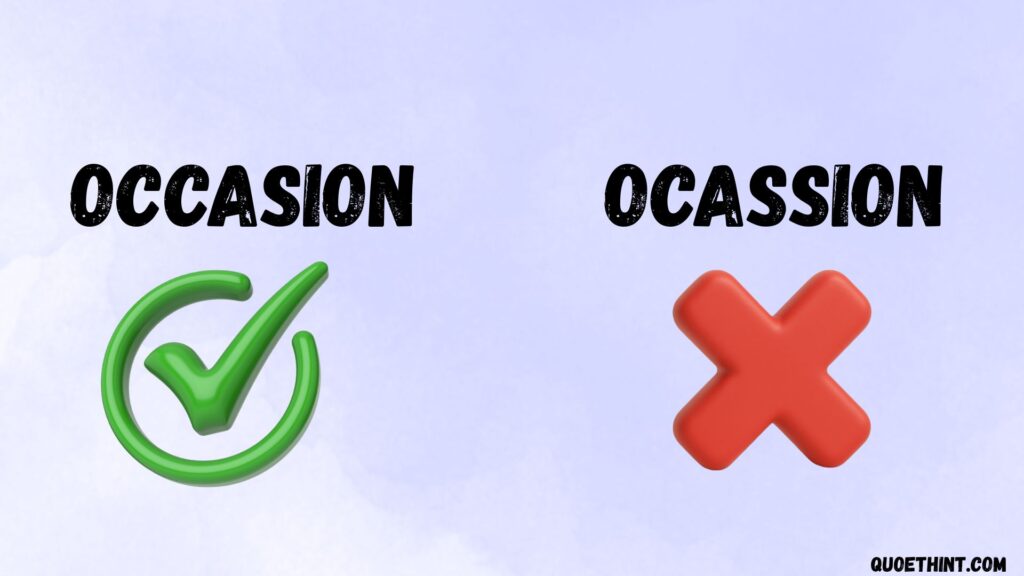
The correct spelling is occasion, with double “c” and a single “s”. Typing it as ocassion is a common error, often caused by typographical mistakes, autocorrect tools, or unfamiliarity with English spelling rules.
Pronunciation matters too. The word should sound like /əˈkeɪʒən/. If you pronounce it /əˈkæsʒən/, you’re not only saying it wrong but spelling it incorrectly too.
Think of it this way: the word “occasion” is rooted in Latin. Its original form, occasio, gives a clue: double “c” comes first, followed by a single “s.” This etymology clue helps many learners memorize the correct form.
Common Misspellings of Occasion
Here’s a quick side-by-side comparison:
| Correct | Incorrect |
|---|---|
| occasion | ocassion |
| occasion | occassion |
| occasion | occass |
| occasions | ocassions |
As you can see, mistakes usually involve mixing up single and double letters. These errors can creep into your writing, especially in emails or professional documents, where careful attention is crucial.
How to Remember the Spelling: Memory Aids
Spelling occasion doesn’t have to be a headache. Here are some helpful memory tricks:
- “Ca” Rule: Remember that the double “c” comes first, followed by a single “s”. Think: c-c-s = “correct, clear, simple.”
- Link it to Latin “occasio”: Knowing the root can reinforce the correct pattern.
- Use context-based memory: For instance, when writing about a celebration or formal occasion, picture a momentous event. Your brain links the word to the event, helping recall the spelling.
Usage in Personal and Professional Contexts
Knowing the correct form is one thing; knowing when and how to use it is another. Let’s explore examples.
Personal Context: Emails and Messages
Imagine you’re sending a birthday invitation to a friend:
Subject: Join Us for a Special Occasion!
Hi Sarah,
I’m thrilled to invite you to a special occasion my 30th birthday celebration! Your presence would make the day even more memorable.Cheers,
Mark
Notice how the correct spelling is crucial. Writing “ocassion” here would look sloppy and distract from your heartfelt message.
Or in a casual text:
Hey Lisa, I can’t wait for the wedding! It’s going to be such a wonderful occasion.
Even in informal communication, accuracy adds professionalism and credibility, even subtly.
Professional Context: Emails and Reports
In business writing, spelling mistakes can undermine your authority. Consider this scenario:
Subject: Planning for the Annual Corporate Gala
Dear Team,
We have an upcoming formal occasion next month. Please ensure all preparations meet our professional standards.Best regards,
Jonathan
If “occasion” were misspelled as “ocassion,” it would reflect poorly on attention to detail, even in a routine email.
Tip: Always double-check words like this in formal writing, reports, and invitations. Professional context demands precision.
Occasional Confusion: Why People Misspell Occasion
Several factors contribute to the confusion:
- Double-letter pattern: English has tricky patterns like “cc” or “ss.” People often forget which comes first.
- Typing speed and autocorrect: Quick typing can lead to “ocassion,” and autocorrect might not catch it if it thinks it’s a valid variant.
- Adverb endings: Sometimes, people confuse occasion with occasionally, thinking the “s” changes in the base form.
Being aware of these common pitfalls can help you avoid errors in writing.
Fun Scenarios for Practice
Let’s practice using both the correct and incorrect forms to see the difference.
Scenario 1: Invitation Email
Incorrect:
Dear Emma,
You are invited to our annual fundraising ocassion. Don’t miss out!
Correct:
Dear Emma,
You are invited to our annual fundraising occasion. Your support means a lot.
The correct version enhances credibility and readability, while the incorrect one sticks out like a typo.
Scenario 2: Personal Message
Incorrect:
Can’t wait for the ocassion tomorrow!
Correct:
Can’t wait for the occasion tomorrow!
Even short messages benefit from accurate spelling, especially if you’re sharing special moments.
The Role of Context
Knowing when to use “occasion” extends beyond spelling. It often refers to:
- Celebrations – birthdays, anniversaries, weddings
- Events – business meetings, corporate galas, workshops
- Personal milestones – graduations, promotions
- Formal occasions – ceremonies, official gatherings
By linking the word to real-life contexts, you strengthen your memory and writing accuracy.
Tools to Help
Even seasoned writers slip up. Here are some tools to help verify spelling in formal writing:
- Spell checkers – Microsoft Word, Google Docs, Grammarly
- Autocorrect tools – ensure they suggest “occasion” and not “ocassion”
- Contextual proofreading – read your writing aloud to catch errors in flow or clarity
Tip: Don’t rely solely on software. Your brain often catches errors software misses.
Pronunciation Check
Remember: /əˈkeɪʒən/ is the correct pronunciation. Mispronouncing it as /əˈkæsʒən/ is a red flag for incorrect spelling. Practicing the word out loud helps reinforce the correct letter pattern.
Quick Recap: Correct vs Incorrect
| Correct | Incorrect | Notes |
|---|---|---|
| occasion | ocassion | Double “c” first, single “s” after |
| occasions | occassions | Plural keeps the pattern |
| occasionally | ocassionally | Adverb follows base word pattern |
Using side-by-side comparisons like this makes spotting errors easier.
Final Tips for Writers
- Use memory tricks: “cc then s” or Latin occasio.
- Read aloud: Spelling often clicks when you pronounce it.
- Context matters: Connect it to events, celebrations, and milestones.
- Proofread: Especially in emails, invitations, or reports.
- Practice regularly: Write sentences, emails, and notes using occasion correctly.
With these tips, you’ll rarely struggle with the spelling again.
Conclusion
The correct spelling is occasion, with a double “c” and single “s.” Avoid “ocassion” or “occassion,” which are common misspellings. From emails to invitations, using the right form improves writing professionalism, clarity, and communication.
Whether you’re celebrating a personal milestone, planning a formal occasion, or just writing casually, remembering the double-letter pattern, pronunciation, and context ensures your writing always looks polished.
**Next time you write “occasion,” think of it as a small but significant victory in writing accuracy and communication clarity. Your readers will notice the difference.

Bugti is the founder of Quoethint.com, a hub for English language tips, writing advice, and grammar guidance. With years of experience in English studies and a passion for clear communication, Bugti created this platform to make grammar and writing easy to understand for everyone.