Have you ever paused mid-sentence and wondered whether it’s “roll call” or “role call”? These two phrases sound almost identical, but they carry very different meanings. Confusing them is common, even among native English speakers. Understanding the distinction can save you from awkward emails, confusing meetings, and minor yet embarrassing mistakes.
This guide dives deep into both terms, explains their correct usage, and gives real-world examples so you can confidently use them in context.
Understanding the Basics
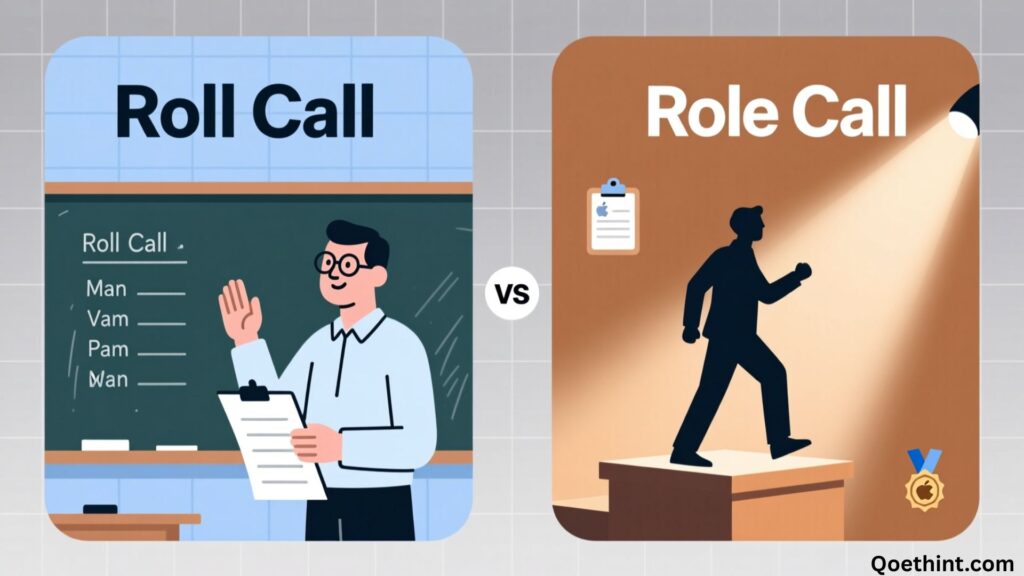
Before jumping into examples, let’s clarify the terms:
- Roll Call: The process of reading a list of names to confirm attendance. You’ll see it in schools, corporate meetings, military check-ins, and other organizational procedures.
- Role Call: Not a standard English term. The word role refers to a job, function, or part someone performs. Using “role call” to check attendance is incorrect.
Think of it this way: a roll is a list you read; a role is a part you play.
Origins and History
Roll Call: Military Roots
The term roll call dates back to military traditions, where a roll essentially a scroll listing soldiers’ names was read aloud to confirm their presence. Missing a name signified someone absent, making roll call crucial for accountability.
Over time, this practice spread to schools, corporate meetings, and other institutional procedures, where tracking attendance remains essential.
Role Call: Misunderstood
“Role call” arises from the word role, which describes a function or duty. People mistakenly combine it with “call” because it sounds similar to “roll.” In reality, role call has no official status in English. It’s only used informally when someone confuses tasks or responsibilities with checking presence.
Why the Confusion Happens
The mix-up between roll and role occurs due to:
- Pronunciation confusion: Both words sound identical in speech.
- Spelling assumptions: People often spell what they hear.
- Context misinterpretation: Using “role” in professional or educational settings when “roll” is appropriate.
Even social media and newspapers contribute to the confusion. Headlines like “School Conducted a Morning Role Call” are common mistakes.
Roll Call: Meaning and Correct Usage
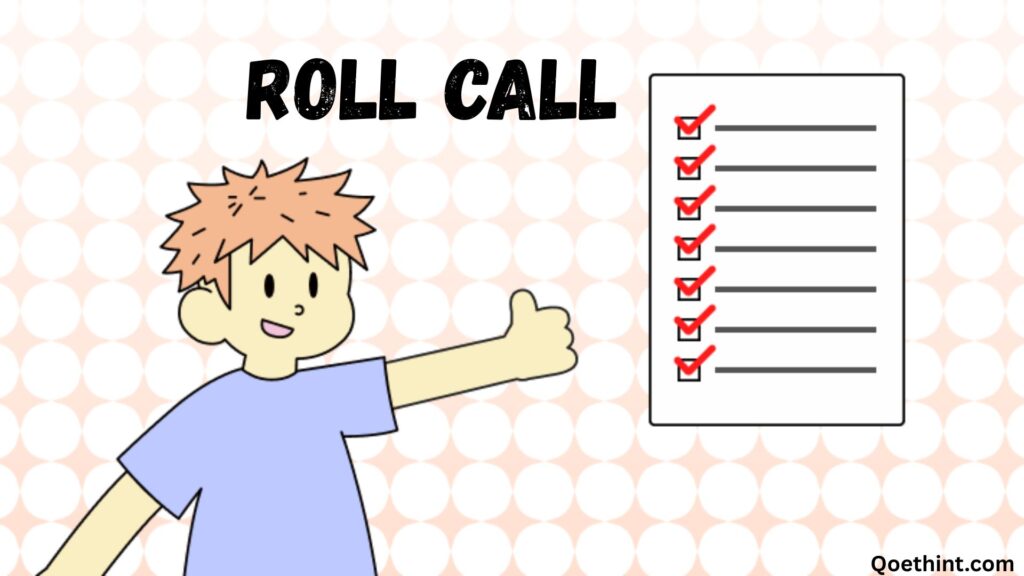
Definition
A roll call is the act of reading a list of names to verify attendance. It’s widely used in:
- Schools: To mark students present
- Corporate meetings: To track participants
- Military: To confirm soldiers’ presence
- Theater rehearsals: To ensure actors are present (attendance, not roles)
Scenario Examples
School Email Example:
Subject: Morning Attendance Roll
Hi Class,
Please reply “present” when I call your name during the morning roll call.
Thanks, Ms. Harper
Corporate Meeting Example:
Hi Team,
We’ll start with a quick roll call to check who’s in today’s Zoom meeting.
Regards, John
Military Context:
Sergeant Davis called the names during the morning roll call. Any absentees were immediately noted for follow-up.
These examples illustrate how roll call is about presence, not roles.
Role Call: What You Need to Know

Definition
Role call is not correct for attendance. Instead, role describes:
- Job responsibilities
- Functions in a project
- Character parts in a play
Scenario Examples
Theater Email Example:
Subject: Actor Roles for Tonight’s Rehearsal
Hi Team,
Please review your roles before rehearsal. We’ll assign stage positions, but there will be no roll call.
Cheers, Emily
Project Team Context:
During the project kickoff, Maria reminded everyone to know their roles. No role call was conducted; the focus was on responsibilities.
Remember, using “role call” to check who’s present is always incorrect.
Roll Call vs Role Call: Side-by-Side Comparison
| Feature | Roll Call | Role Call |
|---|---|---|
| Correct Usage | ✅ Yes | ❌ No |
| Purpose | Confirm attendance | Assign or describe duties |
| Common Context | Schools, military, meetings | Theater, projects, jobs |
| Example | “Start with a roll call.” | Incorrect: “Start with a role call.” |
| Pronunciation | Identical to role call | Identical to roll call |
This table makes it crystal clear why roll call is the correct choice for attendance checks.
Everyday Mistakes and How to Avoid Them
Misuse in Media
People often see phrases like:
- “We had a role call for project roles today”
- “The school conducted a morning role call”
These are incorrect. The correct phrasing should be roll call for attendance and role for responsibilities.
Memory Trick
Think of a roll of paper. Reading names from a list is a roll call. Meanwhile, a role is what you perform your job, duty, or character in a play.
Real-Life Usage Examples
School
The teacher started the roll call. Students answered “present” one by one.
Theater
Actors checked their roles before rehearsal. No roll call was needed; everyone knew their part.
Corporate Meeting
The manager conducted a roll call to ensure all team members attended the strategy session.
Social Media Misuse
“We had a role call for team assignments” → should be “We had a roll call for attendance, then discussed team roles.”
Related Words and Terms
- Attendance Check → synonym for roll call
- Reading a List → what happens during roll call
- Job Responsibilities → instead of role call
- Organizational Procedure → formal roll call processes in workplaces or schools
FAQs
Is “Role Call” Ever Correct?
No. Use roll call when reading names for attendance.
How Do I Correct Someone Who Misuses These Terms?
Politely explain the difference: roll call = checking presence, role = duties/responsibilities.
What’s the Best Way to Remember the Difference?
Visualize a roll of paper for attendance. Think of role as a job or part you perform.
Conclusion
Key Takeaways
- Roll Call = correct term for verifying attendance
- Role Call = incorrect for attendance; refers to duties or functions
Final Tip
Next time you call out names, think roll call, not role call. Clear, professional language avoids confusion in emails, meetings, or classrooms.
Encouragement to Practice
Try using roll call in sentences daily. With consistent use, you’ll confidently avoid one of English’s most common mistakes.

Bugti is the founder of Quoethint.com, a hub for English language tips, writing advice, and grammar guidance. With years of experience in English studies and a passion for clear communication, Bugti created this platform to make grammar and writing easy to understand for everyone.